Done Is Better Than Flawless: The Solo Artist's Case for Letting Go of the Perfect Take
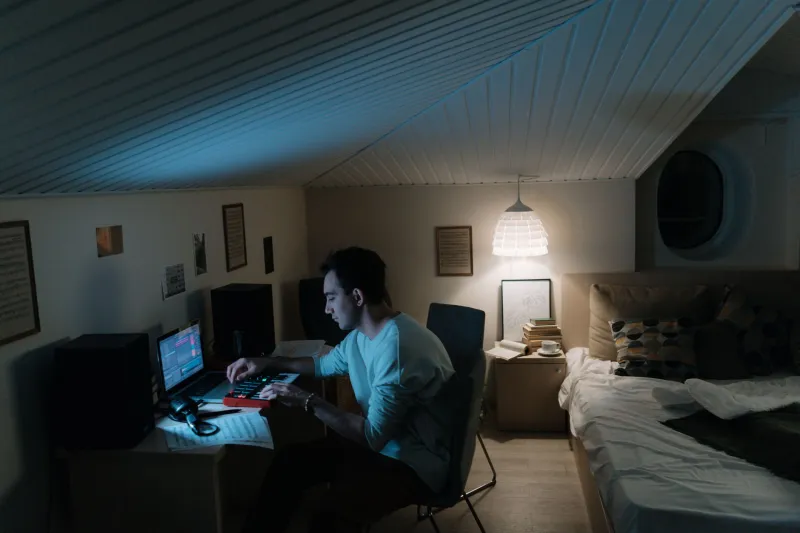
There's a particular kind of silence that every home-recording artist knows. It's not the good kind — not the held-breath quiet before a crowd erupts. It's the 2 a.m. silence of a bedroom studio, headphones clamped on, cursor hovering over the same four bars you've been nudging for three weeks. One more tweak. One more pass. One more reason not to release it.
The pursuit of the perfect take is one of the most seductive traps in independent music, and it's quietly hollowing out some genuinely great artists. The irony? The tracks that are breaking through right now — the ones racking up streams and going viral on TikTok — often sound like they were recorded in someone's car. Because some of them were.
The Myth That Gear Sold You
The home recording boom gave solo artists something incredible: access. A decade ago, studio time cost money most independent musicians simply didn't have. Now, a decent interface, a condenser mic, and a DAW subscription puts near-professional recording within reach of anyone with a spare bedroom and a power strip.
But access came with a side effect nobody warned you about. Suddenly, the standard shifted. Listeners had been trained by major-label productions — compressed, pitch-perfect, sonically immaculate — and the assumption became that indie artists needed to match that benchmark to be taken seriously. Plugin developers got rich selling the dream. YouTube tutorials multiplied. And somewhere in all of that, the idea took root that anything less than pristine was simply not ready.
It was never true. It just felt that way.
What Listeners Are Actually Responding To
Here's the thing about imperfection: listeners don't hear it the way you do. You hear the vocal take where you slightly rushed the second syllable on the bridge. They hear a voice that sounds like a real human being who feels something.
Research into music psychology has consistently found that listeners connect more deeply with performances that carry what producers sometimes call "human error" — micro-variations in timing, natural breath sounds, the slight graininess of an unprocessed room. These aren't flaws in the emotional sense. They're proof of presence. They're the sonic equivalent of eye contact.
Some of the most-shared independent tracks of the last few years have leaned directly into this. Phoebe Bridgers built an entire aesthetic around recordings that feel fragile and exposed. Hozier's early demos circulated partly because they sounded raw and immediate. Oliver Anthony's "Rich Men North of Richmond" hit 40 million views in its first week — recorded on a phone, in a field, with a dog audibly present in the background. The imperfection wasn't incidental. It was the message.
When Tweaking Becomes Avoidance
Let's be honest about what's really happening during those late-night editing sessions. Sometimes it's craft. Often, it's fear.
Perfectionism is a remarkably effective procrastination strategy because it never feels like procrastination. Every additional hour in the DAW feels productive. You're working, after all. You're making it better. But there's a point — and most artists know exactly when they've crossed it — where "making it better" becomes "making sure no one can criticize it." Those are not the same project.
The song you release imperfectly is infinitely more powerful than the song you never release at all. One of them can find an audience. One of them can change someone's day, show up in a playlist, start a conversation. The other one just sits in a folder labeled "v23_FINAL_real_this_time."
A Practical Framework for Knowing When to Stop
So how do you actually break the cycle? A few things that work:
Set a deadline before you start. Not a soft goal — a hard date. Tell someone. Put it in your bio. The external accountability changes the internal calculus.
Do the three-day test. Export a rough mix, put it on your phone, and listen to it like a fan for three days — in the car, on a walk, while making coffee. Note what pulls you out of the experience. If nothing major surfaces, you're probably done.
Separate technical from emotional. Ask yourself: is this note actually wrong, or does it just feel vulnerable? Vulnerability is not a problem to fix. Tune the obvious pitch issues, leave the humanity.
Get a second set of ears — but just one. Not five friends, not a forum. One trusted person whose taste you respect. If they don't notice the thing that's been haunting you for two weeks, let it go.
Give yourself a finish line, not a standard. "I'll keep going until it's perfect" has no ending. "I'll release this on Friday" does.
The Artist Who Ships Wins
The independent music landscape rewards consistency almost as much as quality. An artist who releases something every six weeks — something real, something felt, something slightly rough around the edges — builds a relationship with their audience that no amount of meticulous production can manufacture from a distance.
Your listeners aren't waiting for you to be flawless. They're waiting for you to show up. The catalog you build by releasing imperfect-but-genuine work is worth more than the masterpiece you're still mixing in your head.
Let the take breathe. Let the room noise stay. Let the crack in your voice on the final chorus be exactly what it is — evidence that you meant it.
That's the take worth keeping.