Before You Say Yes: A Solo Artist's No-Nonsense Guide to Picking the Right Collaboration
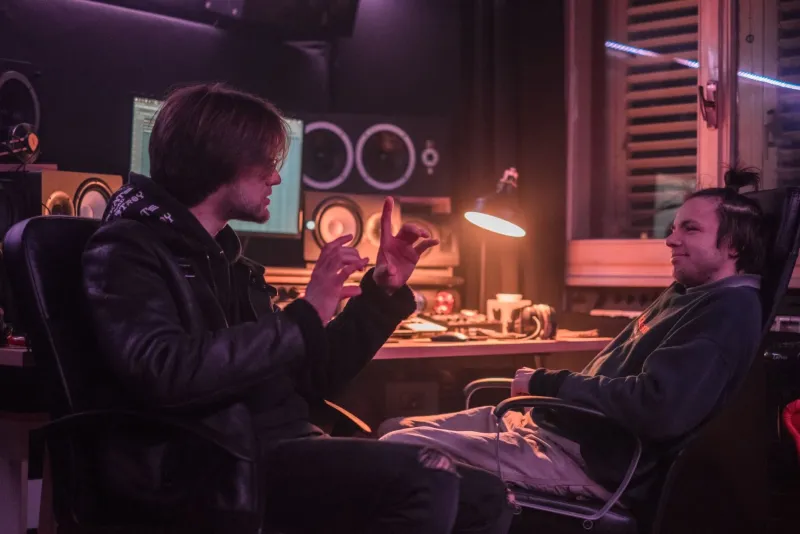
Every independent artist has a collaboration they'd rather forget. The feature that sounded exciting in the DMs and awkward on the final track. The duet where neither voice found space. The split single that got half the streams of your solo work and twice the creative headaches. If you've been making music for more than a year, you probably know exactly which project I'm talking about.
Collaboration has become the default growth strategy for independent musicians, and the logic makes surface-level sense: two audiences, shared promotion, mutual discovery. But the data — and the lived experience of artists who've done this well and badly — tells a more complicated story. Most independent features don't perform the way artists hope. A significant chunk actively underperform solo releases. And the ones that really work? They share a surprisingly consistent set of characteristics.
Let's talk about what those are.
Why Most Features Quietly Fail
The failure mode for independent collaborations rarely looks dramatic. There's no public fallout, no beef, no viral drama. The track just... lands softly. Gets a polite response from both fan bases, generates a modest bump in follows, then fades. Both artists move on and quietly agree not to bring it up.
The underlying reasons are usually one of three things.
Audience incompatibility that nobody stress-tested. Two artists can individually have devoted followings and still have audiences that don't overlap in any meaningful way. A bedroom pop artist with a predominantly college-aged female fanbase and a lo-fi hip-hop producer with a late-teen male demographic might seem like an interesting creative contrast. In practice, neither audience fully claims the resulting track, and it falls into a gap between both.
Genre blending that confused rather than expanded. Successful genre fusion requires both artists to genuinely inhabit the intersection, not just visit it. When a collaboration sounds like two people taking turns in their own lane rather than meeting in a new one, listeners feel the seam. It's not unpleasant — it's just unconvincing.
Creative control imbalances that showed up in the final mix. One artist dominated the sonic identity of the track, leaving the other feeling like a featured vocalist on someone else's song. The resulting promotion is half-hearted on at least one side, and audiences pick up on that asymmetry.
The Compatibility Stack
Before agreeing to any feature or joint release, run the potential collaboration through what we'd call a compatibility stack — a layered series of questions that surfaces mismatches before they become sunk costs.
Layer 1: Sonic proximity. Listen to both catalogs back to back. Not the best tracks — the full body of work. Do they feel like they belong in the same general universe? This doesn't mean identical; some productive tension is good. But if you're toggling between acoustic folk and trap and feeling genuine cognitive whiplash, your listeners will too.
Layer 2: Audience overlap. This is where independent artists often skip the homework. Check your follower demographics if your platform provides them. Look at where the other artist's audience lives geographically, what else they listen to, what content they engage with. If you're both on Spotify for Artists, the "Audience" tab gives you enough data to make an informed guess. Significant overlap means the collaboration amplifies something that already exists. No overlap means you're betting on conversion, which is a much harder ask.
Layer 3: Promotional parity. Are both artists coming in with roughly equivalent reach and promotional commitment? A collaboration where one party has ten times the following of the other isn't inherently bad — sometimes that's a genuine mentorship or co-sign situation with real value for the smaller artist. But both parties need to be honest about what that dynamic is, because it changes the nature of the project.
Layer 4: Creative control expectations. Have the conversation before you make a single sound. Who produces? Who has final say on the mix? What happens if one artist wants to change a lyric the other wrote? These conversations feel awkward upfront and catastrophic after the fact. Have them early.
The Collab Scenarios That Actually Work
The independent collaborations that consistently outperform expectations tend to fit one of a few recognizable patterns.
Adjacent genre, shared values. Two artists whose sounds sit near each other on the spectrum — indie folk and Americana, R&B and neo-soul — and who share a similar aesthetic philosophy about production and storytelling. The collaboration sounds natural because it essentially is.
Complementary strengths. A strong vocalist who produces minimally pairs with a strong producer who doesn't front their own releases. The collaboration isn't a compromise — it's a completion. Each brings what the other lacks.
Genuine pre-existing relationship. This one gets underestimated constantly. Artists who've been genuinely listening to each other's work, who have a real creative rapport before the feature conversation starts, almost always produce better results than strategic partnerships assembled from mutual follower counts. Listeners can tell the difference between two people who respect each other's music and two people who spotted a growth opportunity.
A Simple Decision Filter
When the next feature request hits your inbox, try this before you respond:
- Can you name three specific songs from their catalog that you genuinely love? If you're reaching, that's information.
- Would you be proud to have this track as the first thing a new listener hears from you? If there's hesitation, explore why.
- Are you saying yes because you're excited, or because you feel like you should be growing faster and this feels like a shortcut? Those are very different yeses.
Collaboration done right is one of the most powerful tools in an independent artist's kit. It can introduce your work to audiences who would never have found you otherwise, push your sound somewhere genuinely new, and produce a track that neither of you could have made alone.
But that version of collaboration requires patience, honesty, and the willingness to say no to the ones that aren't right — even when they look good on paper.
The artists building durable independent careers aren't saying yes to everything. They're saying yes carefully, and the difference shows up in the music.