Alone in the Studio, Connected to the World: How Solitude Became the Solo Artist's Superpower
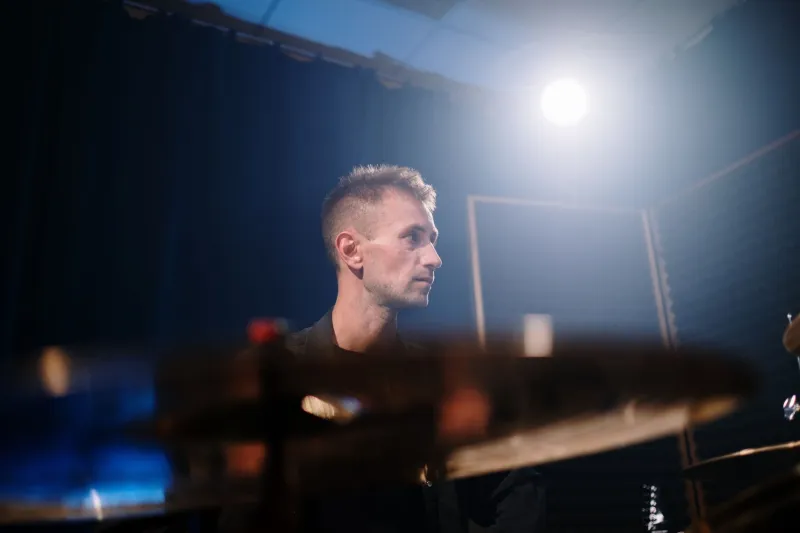
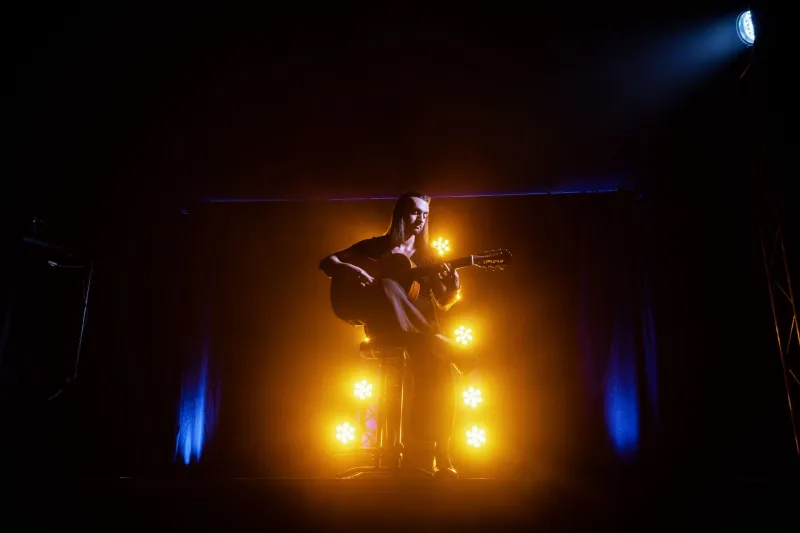
There's a particular kind of quiet that settles in around 2 a.m. when you're the only one in the room. No bandmates to bounce ideas off. No producer leaning over your shoulder. Just you, a half-empty coffee mug, and a track that isn't quite right yet. For a lot of solo artists, that silence used to feel like a problem. Now, more and more of them are realizing it might actually be the whole point.
Loneliness has a PR problem. We talk about it like a wound — something to be treated, managed, or escaped. But spend enough time talking to independent musicians about their creative process, and a different picture starts to emerge. The isolation that comes with going solo isn't just something they tolerate. For many, it's become the engine that drives their most honest, most resonant work.
The Myth of the Lonely Artist (And Why It's Only Half Wrong)
We've romanticized the solitary genius forever — the tortured poet, the painter in a garret, the songwriter locked away with their demons. It's a cliché, sure, but clichés tend to stick around because they're pointing at something real.
Psychologists who study creativity have long noted that solitude creates the conditions for what's called associative thinking — the brain's ability to connect seemingly unrelated ideas in unexpected ways. When we're around other people, we're constantly managing social signals, reading the room, adjusting our output based on perceived reactions. Alone, that filter drops. The weird idea doesn't get laughed off. The vulnerable lyric doesn't get softened. You follow the thread wherever it goes.
For solo musicians, that unfiltered headspace isn't just a nice-to-have. It's where the good stuff lives.
"When I'm working by myself, I don't have to justify anything," says Maya Renee, an indie folk artist based out of Nashville who's been releasing music independently for the past four years. "I can sit with a chord progression that doesn't make sense on paper for three hours until I figure out why it feels right. No one's checking the clock. No one's questioning the direction. It's just me trusting myself."
That kind of radical self-trust is something that's genuinely hard to cultivate in a collaborative environment — not because collaboration is bad, but because groups naturally trend toward consensus. The unusual gets smoothed out. The uncomfortable gets softened. And often, that's exactly where the most compelling music hides.
Solitude Builds a Voice. A Real One.
Here's something worth sitting with: the artists whose voices feel the most distinctive — the ones where you know who it is within three seconds of hitting play — almost universally point to extended periods of working alone as foundational to developing that sound.
It makes sense when you think about it. A voice, in the artistic sense, isn't just a sonic signature. It's a point of view. It's the accumulated weight of everything you've noticed, felt, and wrestled with, filtered through your specific set of experiences. And that kind of depth doesn't come from committee.
Marcus Holloway, a bedroom pop producer from Atlanta who built a following of over 80,000 monthly listeners on Spotify without ever playing a live show, puts it plainly: "I spent two years just making music for myself with no intention of releasing it. That was the most important time of my career. I wasn't trying to sound like anything. I was just processing my life. When I finally did share it, people connected because it was genuinely mine — not a version of what I thought people wanted."
This is the paradox in action. The more inward the process, the more universal the result. There's something about specificity — real, personal, unpolished specificity — that cuts through the noise in a way that carefully crafted relatability never quite manages.
The Psychological Case for Creative Isolation
Research backs this up in interesting ways. Studies on creative cognition suggest that the brain enters a more generative state during periods of low social stimulation. The default mode network — the part of your brain that activates when you're daydreaming, reflecting, or imagining — is more active when you're alone and unstructured. This is the network associated with autobiographical memory, emotional processing, and yes, creative insight.
In other words, the wandering mind isn't wasting time. It's doing some of the most important work.
For solo artists who spend hours alone with their instruments and their thoughts, this isn't abstract neuroscience — it's Tuesday. But understanding why the solitude works can help shift the narrative around it. It's not a consolation prize for not having a band. It's a distinct and genuinely powerful creative mode.
The key, of course, is learning to be comfortable enough in that solitude to actually use it. That's not a given. Plenty of artists hit the isolation wall and freeze — the silence becomes anxiety rather than fuel. The difference, according to musicians who've navigated it successfully, often comes down to reframing what the alone time is for.
"I used to think being alone in the studio meant I was failing somehow," admits Jordan Voss, a singer-songwriter from Portland who writes and records entirely on her own. "Like I should be in a room full of people, collaborating, being part of something bigger. But once I stopped seeing the solitude as a gap and started treating it as the actual work, everything shifted. The music got weirder. And better."
Turning the Ache Into the Art
There's one more piece of this worth naming directly: loneliness doesn't just create the conditions for creativity. Sometimes, it's the subject matter itself.
Some of the most streamed, most-shared, most tattooed-on-people's-wrists songs of the past decade are fundamentally about disconnection — about reaching for something that isn't quite there, about being in a crowded room and feeling completely invisible. These songs resonate because a huge portion of the listening public knows exactly what that feels like. And they tend to be written by people who know it firsthand.
There's an authenticity that comes from writing about an experience you're actually living. Audiences in 2025 are remarkably good at detecting the difference between genuine emotional truth and a competently assembled approximation of it. The solo artist who's sitting alone at midnight, actually feeling the weight of that isolation, and turning it into something — that's the version of the story that lands.
"I wrote my most-listened-to song during one of the loneliest stretches of my life," Maya Renee says. "And every week I get messages from people saying it felt like I wrote it specifically for them. That's the thing — when you go deep enough into your own experience, you somehow end up in everyone else's too."
The Competitive Edge Nobody's Talking About
The music industry is louder than it's ever been. More releases, more platforms, more noise. In that environment, the thing that actually cuts through isn't production quality or playlist placement or a perfectly timed social media strategy — though none of those hurt. It's distinctiveness. It's the sense that there's a real person behind the music with something specific to say.
And that? That's built in the quiet. In the hours nobody sees. In the solitude that used to feel like a disadvantage and turns out to be the whole game.
So the next time the 2 a.m. silence feels like it's closing in, maybe let it. Sit with it a little longer than is comfortable. See what it's trying to tell you. Chances are, it's your best material yet.