One Artist, One Room, One Breaking Point: The Hidden Mental Health Cost of Going Solo
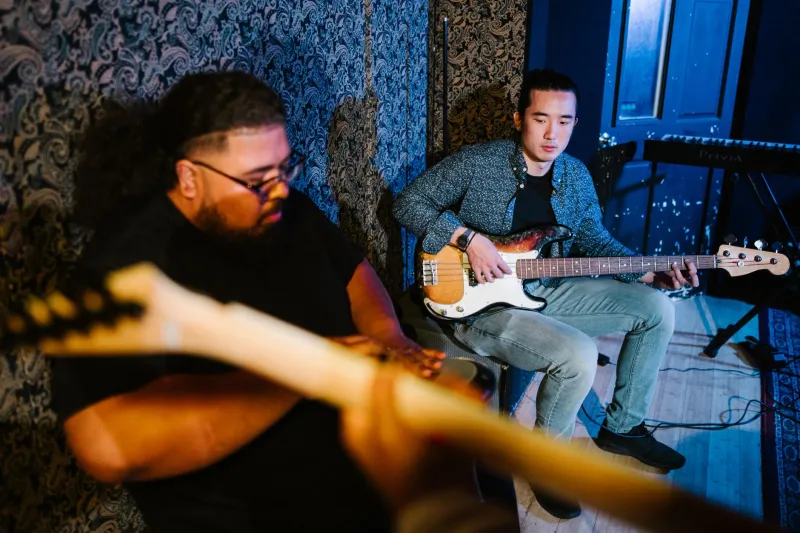
There's a version of the solo artist story that looks incredible from the outside. No label breathing down your neck. No bandmates to split royalties with. No compromises on creative vision. Just you, your instrument, your laptop, and your dream.
Then there's the version nobody posts about.
It's 2 a.m. on a Tuesday and you're refreshing your Spotify for Artists dashboard for the fourth time that hour. Your latest release dropped last Friday. The numbers aren't moving. You've put six months of your life — and a few thousand dollars you didn't really have — into this thing, and the silence feels personal. Because when you're a solo artist, it kind of is.
"There's no buffer," says Marcus Teel, a Nashville-based singer-songwriter who spent three years grinding the independent circuit before he started seriously questioning whether the cost was worth it. "In a band, when something fails, you process it together. When you're solo, every bad review, every empty venue, every dropped stream — it all lands directly on you. There's no one to absorb the hit."
This is the loneliness paradox at the center of independent music: the very autonomy that makes solo artistry so compelling is also what makes it so psychologically brutal.
The Myth of the Fearless Independent
American music culture has always romanticized the lone wolf. From folk legends to bedroom pop producers, we love the image of an artist who needs nobody. It's a compelling story. It also sets an impossible standard.
When your entire creative output is tied to your personal identity, separating your self-worth from your performance metrics becomes extraordinarily difficult. A bad streaming week doesn't just feel like a bad week — it feels like evidence that you aren't good enough. A canceled show doesn't just mean lost income — it can feel like rejection on a deeply personal level.
Dr. Priya Nair, a therapist who works specifically with creative professionals in Los Angeles, says this pattern is one of the most common things she sees in her practice. "Solo artists often have what I call 'merged identity' with their work," she explains. "When the work is criticized or ignored, the nervous system reads that as a direct threat to the self. The brain doesn't distinguish between 'my song didn't perform well' and 'I am not valuable.' That's an exhausting place to live."
And most solo artists live there full-time.
Burnout Doesn't Announce Itself
Charlotte Reyes had been releasing music independently for four years when she hit a wall she didn't see coming. Based in Austin, she'd built a modest but loyal following — a few thousand monthly listeners, a solid email list, consistent show bookings at local venues. By most independent artist metrics, she was doing well.
"But I was completely hollow inside," she says. "I'd wake up and the first thing I'd do is check numbers. Not because I was excited — because I was scared. It had become this compulsive thing. And the music itself had stopped feeling like mine. It felt like content I was producing to feed an algorithm."
Burnout in solo artists often looks different from burnout in other professions because the lines between work and identity are so blurred. You can't clock out of being yourself. Rest feels like falling behind. Taking a week off from social media feels like career suicide. The hustle culture embedded in independent music spaces — where productivity is constantly equated with passion — makes it even harder to recognize when you've crossed from dedication into damage.
Reyes eventually stepped back from releasing music for eight months. It was, she says, the hardest and most necessary thing she's ever done. "I had to relearn why I started. And I had to be okay with the fact that the numbers didn't care about my reasons."
Building Community Without Losing Yourself
One of the more counterintuitive discoveries many solo artists make is that the antidote to isolation isn't necessarily more connection with fans — it's deeper connection with peers.
Online communities like the Indie Music Hub on Discord, or collectives like the Artist Cooperative in Brooklyn and the DIY Nashville Network, have become informal support systems where solo artists talk openly about mental health, financial stress, and creative blocks. These aren't mastermind groups or networking events. They're closer to group therapy with better playlists.
"I found my people online," says Jordan Fisk, an electronic producer based in Portland who makes music entirely on his own. "We don't collaborate on music — we just talk. About the hard stuff. About what it's actually like. And that changed everything for me. I stopped feeling like I was the only one struggling."
Therapy, too, is becoming less stigmatized in independent music spaces. Organizations like Sweet Relief Musicians Fund offer mental health resources specifically for independent musicians, and the conversation around artist wellness is slowly getting louder — even if it's still not loud enough.
Practical Anchors in an Unstable Industry
For solo artists actively trying to protect their mental health while still building a career, a few strategies consistently come up in conversations.
Separate the metrics from the meaning. Set specific times to check analytics and stick to them. Outside those windows, the numbers don't exist. Your worth as an artist — and as a person — was never in the dashboard.
Create for the drawer sometimes. Not everything needs to be released. Not everything needs an audience. Making music that only you will ever hear can be one of the most liberating things a solo artist does.
Name your non-negotiables. Whether it's a daily walk, a weekly phone call with a friend who isn't in the industry, or a hard stop on work at 9 p.m. — having something in your life that has nothing to do with your career creates a psychological anchor that streaming numbers can't touch.
Talk to someone who gets it. Whether that's a therapist, a peer community, or a mentor who's been in the trenches — isolation compounds every other struggle. You don't have to process this alone just because you make music alone.
The Voice That Keeps Going
There's a reason SoloSong exists. There's a reason we keep telling these stories. Because behind every independent release, every self-booked tour, every late-night recording session is a real human being doing something extraordinarily hard with very little support and a lot of heart.
The solo music path is worth celebrating. And part of celebrating it honestly means acknowledging what it costs — not to discourage anyone, but to make sure no artist feels like they're the only one paying that price.
You're not. And that, at least, is something.


