One Person, A Hundred Sounds: The Loop Station Revolution Changing Live Music Forever

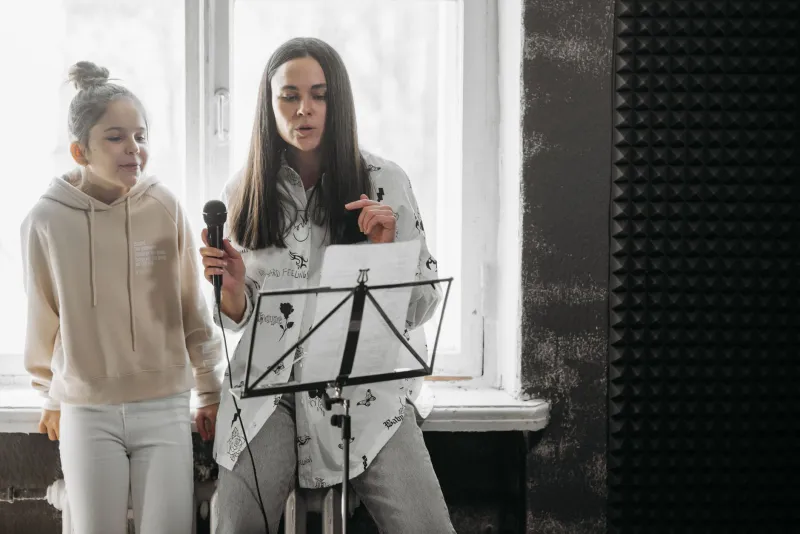
There's a moment that happens at almost every live looping show. Someone in the audience leans over to their friend and whispers, wait, is that all one person? The friend nods. A beat of silence. Then both of them just stare.
That moment—that quiet, collective amazement—is exactly why so many independent musicians have fallen hard for loop stations. And honestly? It's not hard to see why.
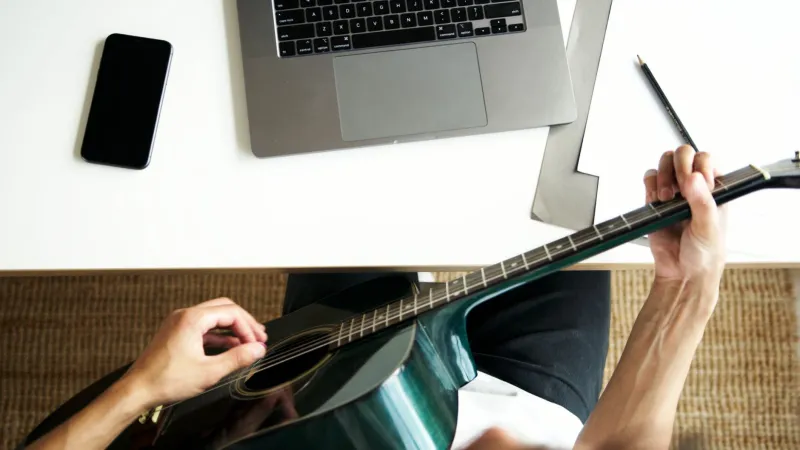
For the uninitiated, loop pedals (and the more sophisticated loop stations built around them) let a single performer record short musical phrases in real time, layer them on top of each other, and build something that sounds far bigger than one human being should be capable of producing alone. A guitarist might lay down a chord progression, loop it, add a bassline tapped on the guitar body, loop that, sing a harmony, loop it again—and suddenly there's a full arrangement breathing in the room. No backing tracks. No click-track safety net. Just one artist and whatever they can conjure in the moment.
From Novelty to Necessity
For a long time, live looping got pigeonholed as a party trick. YouTube clips of street performers doing Beatles covers with a loop pedal racked up millions of views, but the format didn't always get taken seriously as a legitimate artistic tool. That's changed dramatically over the last several years.
Kasima Chorak, a Nashville-based multi-instrumentalist who performs under the name Quiet Current, remembers when she first started looping at open mics around East Nashville. "People would clap, but you could tell they were clapping at the trick more than the music," she says. "Now when I perform, the loop station is basically invisible to the audience. They're just listening to the song."
That invisibility is the goal. The best live loopers have moved past the gimmick phase entirely. The technology has matured, the artists have gotten more sophisticated, and audiences—especially younger ones who've grown up watching bedroom producers build tracks in real time on streaming platforms—are more fluent in understanding what they're seeing.
Building Cathedrals Out of Thin Air
What separates a compelling live looping performance from a glorified demo is arrangement. Anyone can layer sounds. Not everyone can build something that feels inevitable—where each new loop arrives exactly when the song needs it and the whole thing holds together like it was composed that way.
Marco Reyes, a Chicago-based artist who blends fingerstyle guitar with ambient electronics, describes his approach as "architectural." "I think about the set like a building," he explains. "You lay the foundation first—usually something rhythmic, something that grounds people. Then you add walls. Then you start decorating. If you skip steps or rush the structure, the whole thing collapses emotionally, even if it's technically working."
Reyes performs with a Boss RC-505 loop station, a vocal processor, and a custom effects chain that lets him manipulate sounds in real time. He can make a single acoustic guitar phrase sound like a string section by the time he's done layering reverb, pitch-shifting, and subtle distortion. "The goal is always to serve the song," he says. "I'm not trying to show off the gear. The gear is supposed to disappear."
The Intimacy Paradox
Here's the thing that surprises most people when they first experience a great live looping performance: it doesn't feel less intimate because the sound is bigger. If anything, it feels more intimate.
With a full band, there's a natural diffusion of attention. Your eyes move from the drummer to the bassist to the vocalist. The emotional responsibility is shared. But when one person is building an entire world in front of you—making decisions in real time, recovering from mistakes, visibly constructing something—there's a vulnerability to it that a polished band performance rarely achieves.
Chorak puts it simply: "People can see me think. They can see me breathe. That's not something you get when there are five people on stage."
That transparency is part of what makes the format so well-suited to the independent artist's ethos. There's no hiding behind production. Every choice is visible. Every loop is a commitment. It's inherently honest in a way that resonates with audiences who've grown skeptical of over-produced, over-managed pop spectacle.
The Learning Curve Is Real (And Worth It)
None of this comes easy. Ask any working loop artist about their early performances and they'll laugh—or wince. The technical demands are significant. You're managing tempo consistency (most loopers don't use a click track), gain staging across multiple layers, effects routing, and actual musical performance all at the same time. A single mistimed loop can derail an entire song.
"I played a show in Brooklyn about two years into learning this," recalls Priya Nair, a singer-songwriter and multi-instrumentalist based in Austin who incorporates Carnatic vocal techniques into her loop-based performances. "I accidentally hit the wrong footswitch and erased my entire loop in the middle of the chorus. In front of like 200 people. I just started laughing. What else can you do?"
Nair's advice for musicians curious about getting started? Start smaller than you think you need to. "A lot of people buy a fancy station right away and get overwhelmed," she says. "Start with a basic two-track looper. Learn how to make one extra layer sound intentional. That's the whole skill, honestly. Making every layer feel like it belongs."
Reyes recommends practicing with a metronome obsessively before you ever step on stage. "Your internal clock has to be a machine," he says. "Not because the music has to be robotic—it doesn't. But because the loops don't lie. They'll expose every timing problem you have."
What's Coming Next
The tools are only getting better. Newer loop stations are incorporating MIDI sync, real-time pitch correction, and integration with digital audio workstations that let artists design increasingly complex performance rigs. Some artists are starting to blur the line between live looping and live production, triggering sample banks and synthesizers alongside their acoustic instruments.
But the artists doing the most interesting work tend to be the ones who resist the temptation to add more just because they can. The magic of live looping—the thing that makes it genuinely moving rather than merely impressive—is still rooted in that single human being, standing in a room, building something from nothing.
One voice. One instrument. A hundred sounds. And an audience that can't quite believe what they're hearing.
That's the loop station revolution. And it's only getting started.