Your Show, Your Rules: How Independent Artists Are Cutting Out the Middleman and Selling Directly to Fans
If you've bought a concert ticket recently, you already know the drill. You find the show, you get excited, you click through to checkout — and then you watch a $25 ticket become a $47 ticket after service fees, facility charges, and whatever Ticketmaster has decided to call its latest surcharge. It's a frustrating experience for fans. For the artist, especially an independent one, it's often even worse.
Because here's the part that doesn't show up in the checkout screen: a significant chunk of what you do pay often never reaches the artist at all.
"I played a venue that used a major ticketing platform," says Dara Osei, a folk-pop singer-songwriter based in Chicago. "Sold out a 200-person room. By the time the venue took their cut, the platform took their cut, and I covered my own travel and merch printing, I made less than I would have working a weekend shift at a coffee shop. For a sold-out show."
That math is driving a growing wave of independent artists to rethink not just how they sell tickets, but how they think about fan access altogether.
The Architecture of a Rigged Game
The traditional live music infrastructure was never really designed with independent artists in mind. It was built for scale — for artists with labels, managers, booking agents, and the kind of name recognition that guarantees butts in seats regardless of which platform sells the tickets.
For solo artists without that machinery behind them, the system extracts more than it gives. Venue contracts often mandate specific ticketing partners. Those partners charge fees that price out casual fans. The artist gets a flat guarantee — if they're lucky — while everyone else in the chain clips their percentage.
Then came the pandemic. And everything broke open.
With live music shut down for the better part of two years, independent artists had no choice but to build direct relationships with fans — through email, through Patreon, through Discord, through any channel they could control. When venues reopened, a lot of those artists looked at the old model and decided they didn't want to go back.
The House Show Renaissance
House shows have always existed in indie music circles, but they've experienced a genuine resurgence in the last few years — and the economics are a big reason why.
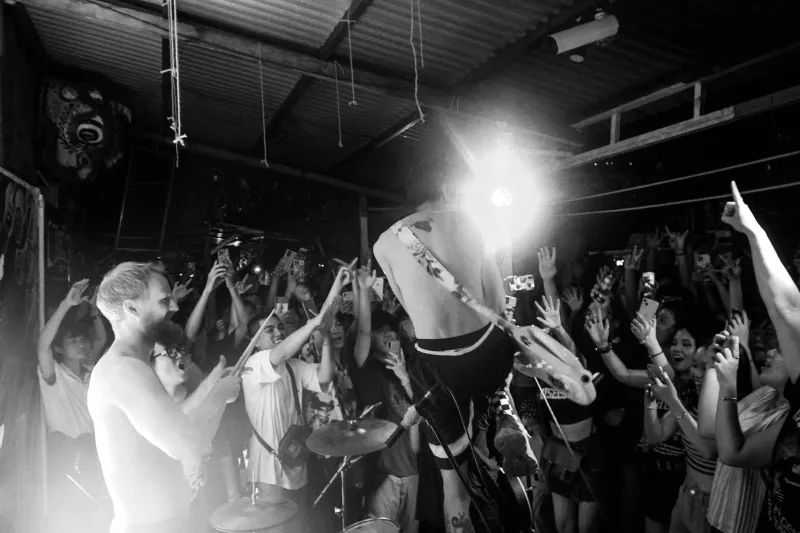
When an artist books a house show, the transaction is simple: a host opens their home (or backyard, or barn, or warehouse), fans pay the artist directly — often through Venmo, cash, or a simple link — and the artist keeps everything. No platform fees. No venue cut. No ticketing surcharges.
"I did a run of 12 house shows last fall," says Mia Sandoval, an indie folk artist from Albuquerque who has been releasing music independently since 2019. "Every single one was booked through my email list. I sent one email, people responded, I picked hosts, and we built the shows from there. I made more on that run than I had on any comparable tour using traditional venues."
Sandoval's email list — which she's been building steadily for four years — is now her most valuable professional asset. Not her Spotify following. Not her Instagram. Her email list. "I own that list," she says. "No algorithm can hide it from me. No platform can deplatform it. Those are my people and I can reach them anytime."
Patreon, Discord, and the Membership Model
Beyond house shows, a growing number of solo artists are building what amounts to a private membership economy around their work.
Patreon has become a particularly powerful tool for independent musicians who want to offer tiered access — from early song releases and behind-the-scenes content at lower price points, to exclusive virtual performances, handwritten lyrics, and direct messaging access at higher tiers. For artists with even a few hundred dedicated fans, the monthly recurring revenue can be transformative.
Take the case of Leo Vance, a bedroom pop artist from Philadelphia who has never had more than 8,000 monthly Spotify listeners. On paper, those aren't headline numbers. But Leo has 340 Patreon supporters paying an average of $9 a month. That's over $3,000 in predictable monthly income — before he books a single show or sells a single download.
"Patreon changed how I think about my audience entirely," he says. "I'm not chasing streams anymore. I'm serving a community. And that community funds my music directly. It's the most honest transaction I've ever had with fans."
Discord has emerged as the community layer on top of these membership models. Artists are building private servers where fans can interact with each other, get first access to show announcements, vote on setlists, and participate in listening parties for unreleased material. The intimacy of these spaces creates a kind of fan loyalty that no algorithm can manufacture.
The Tools Making It Possible
The infrastructure for direct-to-fan commerce has matured significantly in the last few years, and independent artists are taking advantage.
Bandcamp remains one of the most artist-friendly platforms in the business, taking a smaller percentage than most competitors and allowing artists to sell music, merch, and tickets directly. Bandcamp Fridays — where the platform waives its cut entirely — have become genuine cultural events in indie music circles.
Eventbrite and DICE offer more flexible ticketing structures than legacy platforms, with lower fees and better data transparency. Some artists use these for ticketed events while routing the actual fan communication through their own channels.
Mailchimp and ConvertKit for email. Ko-fi for one-time support. Gumroad for digital product sales. The toolkit is deep, and more artists are learning to use it.
"I treat my business like a small business," says Osei, who has spent the last year rebuilding her touring approach around direct fan relationships. "Because that's what it is. And small businesses that survive are the ones that own their customer relationships."
What This Means for the Future of Independent Live Music
None of this means traditional venues are going away. Plenty of independent artists still want — and need — the infrastructure, sound systems, and promotional reach that established venues provide. The point isn't to burn the system down. The point is to have options.
What's shifting is the power dynamic. Solo artists who build direct fan relationships aren't at the mercy of any single platform, venue, or ticketing company. They have leverage. They have alternatives. And increasingly, they have the data and the community to make smart decisions about where, when, and how they perform.
For fans, this shift often means better shows — more intimate, more intentional, and more connected to the actual artist. The house show isn't just a budget option. For a lot of people, it's become the preferred one.
And for solo artists, the message is becoming clearer every year: the gate doesn't belong to the gatekeeper anymore. You can build your own.


